
What Exactly Is a Heart Murmur in Dogs?
When your vet listens to your dog’s heart with a stethoscope and says, “I hear a murmur,” it’s easy to panic. But a heart murmur isn’t a disease—it’s a sound. Think of it like a whisper in a busy room: it’s not the noise itself that matters, but what’s causing it. In dogs, a heart murmur means there’s turbulence in the bloodstream as it flows through the heart’s chambers and valves. This turbulence creates that whooshing or swishing sound doctors hear. It’s not a heartbeat. It’s not a cough. It’s a signal, not a sentence.
Murmurs are graded on a scale from 1 to 6, with 1 being barely audible and 6 being so loud you can almost feel it through the chest wall. A grade 1 murmur might only be heard under quiet conditions, while a grade 6 murmur might be heard even without the stethoscope, and in some cases, even felt as a vibration on the chest known as a thrill. But grading alone doesn’t tell the whole story. A loud murmur doesn’t always mean serious heart disease. Some small breeds like Chihuahuas or Poodles can have innocent murmurs that fade with age.
The real question isn’t how loud the murmur is—it’s what’s behind it. Is it a sign of a defective valve, a hole in the heart, or something more serious? That’s why no dog should be labeled with a murmur and left at that. Follow-up is essential.
Common Causes Behind the Whoosh: From Innocent to Serious
Not all murmurs are created equal. Some are harmless, some indicate mild issues, and others point to life-threatening conditions. The most common causes fall into three categories.
First, there’s the innocent or functional murmur. This is often found in young, healthy dogs, especially small breeds. It’s thought to result from fast blood flow through a normal heart. These murmurs often vanish on their own by age 1 to 2. A 10-pound Bichon Frise named Luna from Portland, Oregon, was diagnosed with a grade 2 murmur at 6 months old. Her vet said it was likely innocent. After a full cardiac exam, including an echocardiogram, Luna’s heart was normal. By her first birthday, the murmur had disappeared. Her owner said, “I was terrified. But the vet said, \’It’s like a breeze in the wind—no harm, just a little noise.\'”
The second group includes murmurs caused by structural heart defects. These are often present from birth or appear early in life. A common example is a patent ductus arteriosus (PDA), where a fetal blood vessel doesn’t close after birth, creating a hole between two major arteries. This causes blood to shunt back and forth, leading to a loud, continuous murmur. Dogs like Golden Retrievers and German Shepherds are at higher risk. If caught early, PDA can be surgically corrected with excellent outcomes.
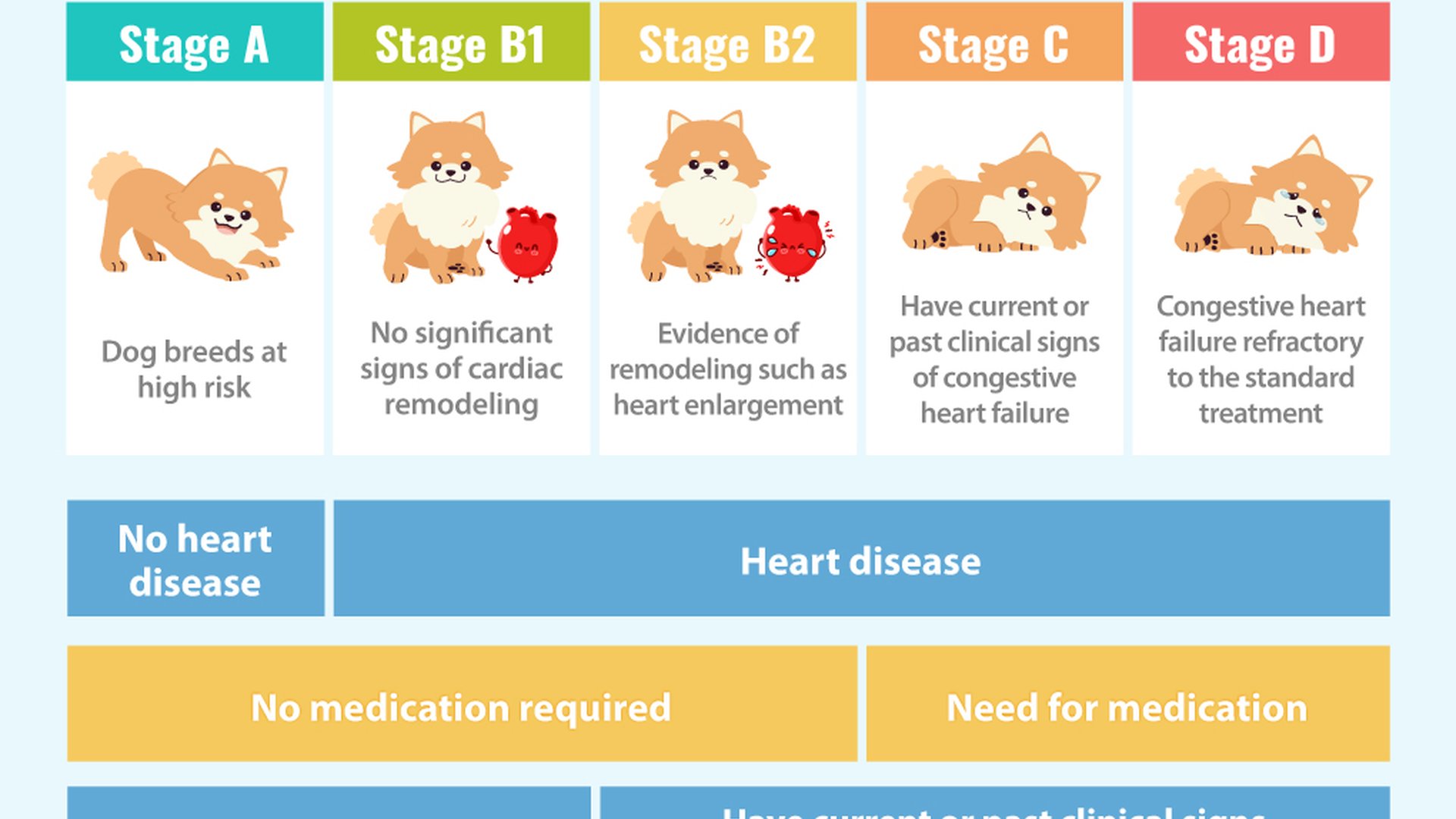
The third and most concerning category is murmurs due to degenerative valve disease, especially in older dogs. This is the most frequent cause of heart murmurs in middle- to older-aged dogs, particularly in breeds like Cavalier King Charles Spaniels, Dachshunds, and Poodles. The mitral valve, which separates the left atrium and left ventricle, begins to leak. As it does, blood flows backward into the atrium, creating a murmur. Over time, this strain can lead to heart failure. But here’s the key: this doesn’t happen overnight. Many dogs live with mild leaks for years with no symptoms at all.
When a Murmur Isn’t Just a Sound
A murmur by itself is not an emergency. But it’s a red flag that needs attention. The real danger lies in ignoring it. A dog can have a murmur for months or even years and show no signs—no coughing, no fatigue, no struggling to breathe. But the damage may still be building.
That’s why every dog with a detected murmur should undergo a cardiac workup. This starts with a detailed exam: the vet checks for a normal heart rate, checks for fluid in the lungs (wet coughs, labored breathing), and assesses the dog’s overall energy level. Then, an electrocardiogram (ECG) may be done to look at rhythm, and a chest X-ray to see heart size and lung condition. But the gold standard is an echocardiogram—a specialized ultrasound of the heart. It shows exactly how the valves are working, if there’s any structural damage, and how hard the heart is pumping.
Take the case of Max, a 9-year-old Shih Tzu from Chicago. His owner first noticed he was panting more at night and sleeping more. The vet heard a grade 4 murmur. An echocardiogram revealed severe mitral valve leakage. Without treatment, Max’s life expectancy would have been 6 to 12 months. With medication and close monitoring, he lived three more years with a good quality of life. “It wasn’t the murmur that hurt him,” his owner said. “It was waiting to act.”

What Owners Can Do: Follow-Up and Monitoring
If your dog has a murmur, don’t assume the worst. But don’t assume the best either. The best path is clear: work with your vet to determine what’s causing it.
For a grade 1 or 2 murmur with no symptoms and a normal echo, your vet might recommend simple monitoring—checkups every 6 to 12 months. For a higher-grade murmur, or one associated with valve disease, your vet may prescribe medication like pimobendan to help the heart pump more efficiently.
Daily observation is also critical. Watch for signs like: persistent coughing, especially at night; increased fatigue during walks; shortness of breath after mild exercise; or swelling in the belly or legs (a sign of fluid retention). If any of these appear, contact your vet immediately.
Remember: a heart murmur doesn’t equal heart failure. Many dogs live full, happy lives with murmurs under careful management. But missing the signs can change outcomes quickly. Early detection isn’t about fear—it’s about control.

Final Thoughts: Knowing the Sound, Not Just the Noise
A dog’s heart murmur is more than a sound. It’s a conversation between your pet’s body and your vet. It speaks of risk, of structure, of age, and of care. It’s not a sentence, but a starting point.
The moment you hear “murmur,” it’s not time to panic. It’s time to listen—actively, clearly, and with confidence. Your dog’s heart is a powerful organ, and with today’s veterinary science, even a noisy heart can beat strong for years.
Stay curious. Stay calm. And most of all, stay informed.